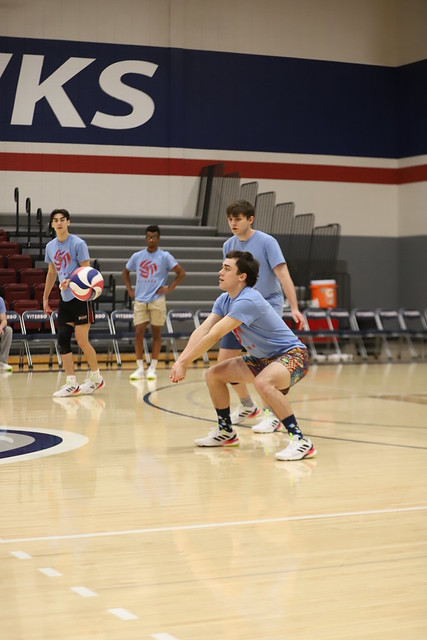
Coming into college as a freshman in sports takes a willingness to adapt to a variety of challenges, as well as a dedicated mindset capable of handling pressure. The difference between high school and collegiate sports is tremendous, but Leonard Kangas has learned to adapt and embrace the challenge.
Kangas commented on the difficulty of adapting to such an intense level of athletics. “My high school team wasn’t very put together and was new,” he said. “It’s interesting coming to a whole new level. As cliche as it is, college is just a different ball game, and the difference between being ‘top dog’ in your gym at home to one of the less talented players in the gym is jarring.”
Kangas also insisted on the importance of maintaining a good work ethic and drive. “I’ve learned to adapt by playing against some collegiate-level players in the past, but the biggest adjustment is taking the time to perfect the small things so they cannot be messed up. It’s an important factor I am still refining,” said Kangas.
In addition to cultivating a strong work ethic, having a teammate to hold you accountable also plays a factor for first-year students playing at the collegiate level. When it comes to leaders, they can show their role in various forms. Athletes watch, learn, and grow by observing what they do. When asked who his biggest mentor on the team is, Kangas said, “my biggest mentor is Daxton Marschall, a senior. He’s another defensive specialist on the team. He hasn’t said anything specific to me but simply seeing how hard he works in the gym is truly inspiring. I have a tendency to lose focus but seeing him take every rep so seriously reminds me that if I am not working hard enough, I won’t make it on the court,” he said. Kangas’ reflection on mentorship shows the impact a teammate can have on a first-year college athlete. It helps shape them and familiarizes them with not only collegiate-level sports, but also college as a whole.
Lastly, goals can also take place within the freshman collegiate level. Kangas mentioned growth and personality when asked about what kind of legacy he wants to build moving forward. “I definitely want to build a better culture on the volleyball team,” Kangas said. “I’m an energetic person, so with spending my time either on or off the bench I want to bring the energy and motivate my teammates to work harder. I also hope to encourage those who wish to join the team in the future to match that energy and feel welcomed.”
After interviewing Kangas, his words are not only encouraging but explain from the point of view of a freshman athlete how to take on the challenge with support and self-determination. His story is a representation of not only dedication, but also inspiration.