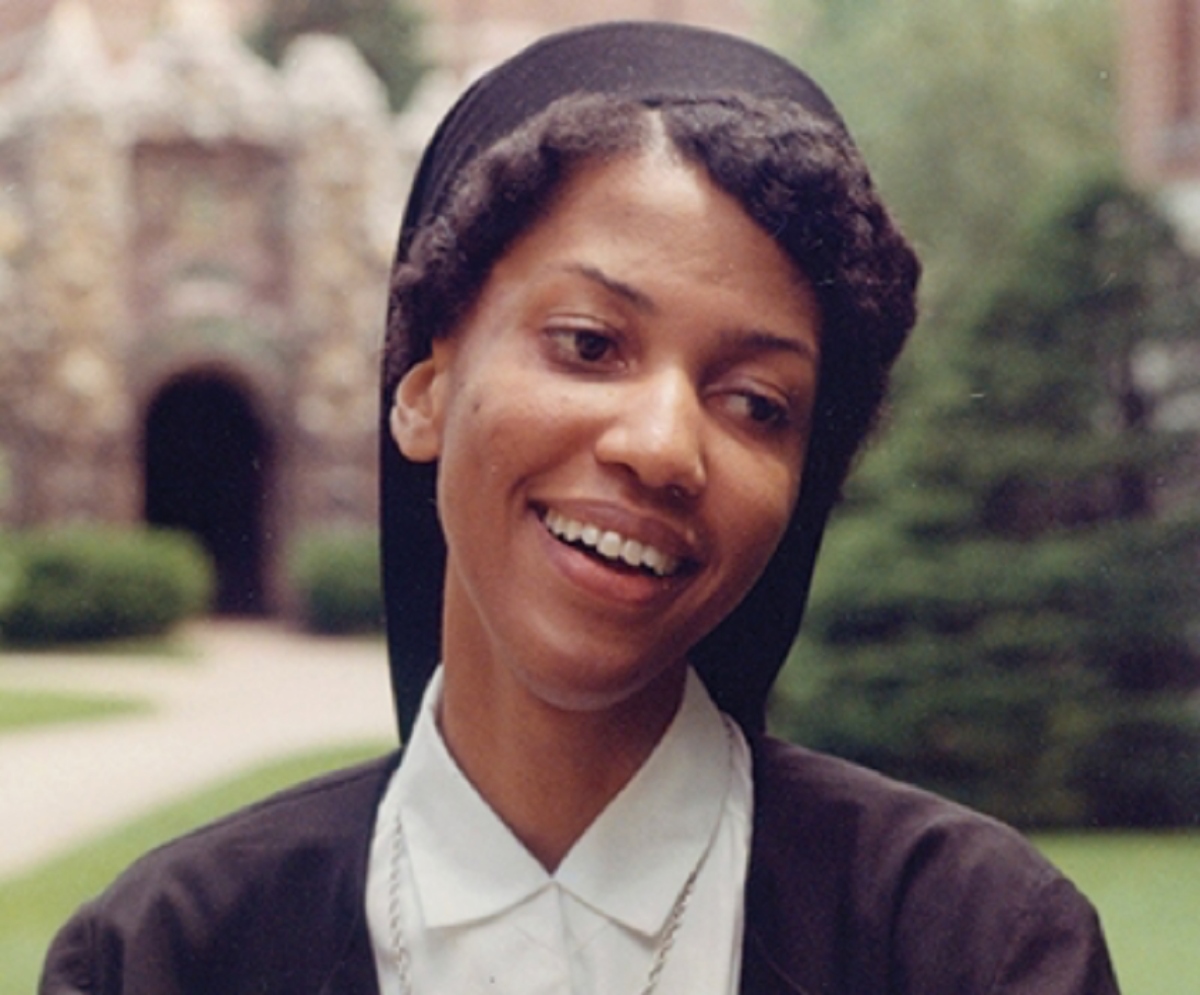
Sister Thea Bowman graced Viterbo for only a short period of her life, but her impact remains. Sr. Bowman was inspiring and demonstrated what many students on campus look up to.
Before examining Sr. Bowman’s impact on Viterbo, it is important to know where she came from. “At the age of fifteen she told her parents and friends she wanted to join the Franciscan Sisters of Perpetual Adoration and left the familiar Mississippi terrain to venture to the unfamiliar town of La Crosse, Wisconsin where she would be the only African American member of her religious community,” according to sisterBowmanbowman.com. In La Crosse, Sr. Bowman, given the name “Thea,” which means “God,” was trained to be a teacher. Sr. Bowman earned her Bachelor of Arts degree in English, specializing in speech and drama, in 1965.
After this, Sr. Bowman moved to Washington, D.C. to gain her Master’s Degree in 1969, and eventually earned her PhD from The Catholic University of America in 1972 in English language, literature, and linguistics (Viterbo Strides Spring 2015). While at The Catholic University, Sr. Bowman got to know Sister Mary Ann Gschwind, who had a lot to say about how much Sr. Bowman loved all people. “We had a bus driver at Catholic University. She and Randy got to be really good friends, and she could really talk to him,” said Sr. Gschwind. When Sr. Bowman finished her PhD, she moved back to Viterbo where she served as the Chair of the English department. Many described her as one of the most powerful women on campus.
Being one of the only Black figures in La Crosse during the civil rights movement proved to be challenge to Sr. Bowman according to Viterbo Strides (Spring 2015). “One of the very few black people in La Crosse at the time, she was a face of the Civil Rights movement, often appearing in local media and working to promote racial equality.” Through it all, Sr. Bowman remained a faithful and positive influence on Viterbo.
During this time, Sr. Bowman served as a light during hard times, as she fought for social change and racial justice. “Spurred by the need to return home to Canton to care for her aging parents, in 1978, Sister Bowman, with the blessing, approval and permission of her superior and religious community, accepted an appointment by Bishop Joseph Bernard Brunini to direct the Office of Intercultural Affairs for the Diocese of Jackson. In this position Sister Bowman continued to assail racial prejudice and promote cultural awareness and sensitivity,” according to sisterBowmanbowman.com.
Dan Johnson, a professor for the Music program on campus, recalled that Sr. Bowman called him “little brother.” Johnson had a lot to say about Sr. Bowman and how important social change was to her. In fact, it was what brought the two together. Johnson recalled a time in which the Hallelujah Choir, Viterbo’s choir composed of Black women, were invited to Camp Douglas. Upon finding out that the choir was Black, Camp Douglas turned the singers down. That was until Johnson’s group, The Marionettes, were asked to join. Hallelujah singers can come too, otherwise we’re out.” This is what started Sr. Bowman and Johnson’s relationship. When Sr. Bowman approached Johnson to ask why he did it, he simply stated that it was out of respect and equality.
That was until 1984, when Sr. Bowman experienced a devastating change. Sr. Bowman was diagnosed with breast cancer, and both of her parents passed away. This did not stop Sr. Bowman, though, who at this time vowed to “live until I die.” Sr. Bowman died on March 30, 1990, from breast cancer. She lived to be 52 years old.
While it has been 35 years since Sr. Bowman died, her impact still leaves a mark on Viterbo University. In 2022, Viterbo established the Sr. Thea Bowman Center to honor and celebrate Sr. Bowman’s life. Her impact still remains strong.
Dr. Jackie Herbers, Chair of the English department, spoke about Sr. Bowman and her impact on Viterbo. “She [was] very memorable in the classroom. So I know that it is impossible to fill those shoes. But I try to create an environment in which people, our faculty and our students feel cared for and feel like they can be just as brave as she was in fighting for what they think is right,” said Herbers.